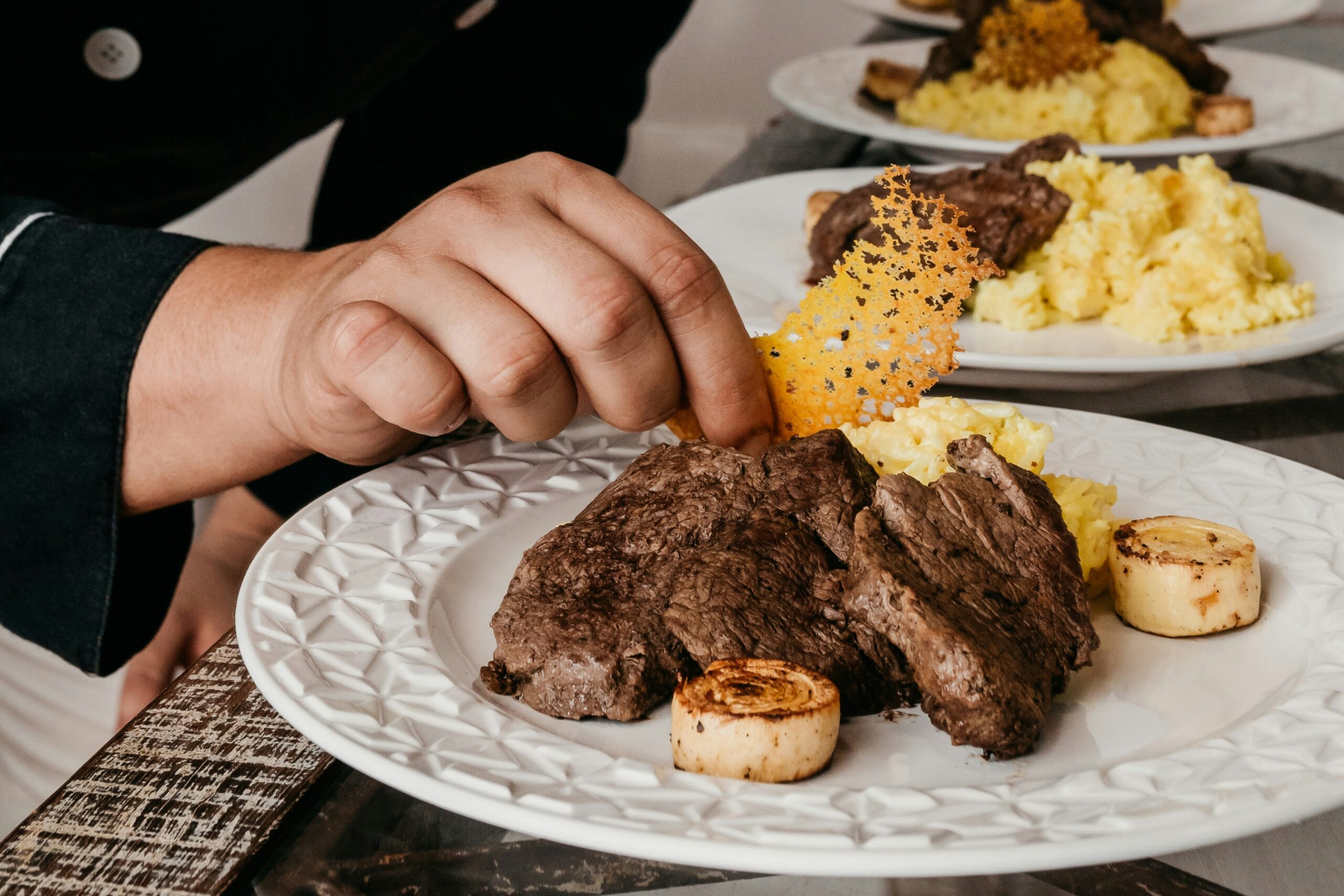
Chapter 4 of the ancient Jewish text Hilchot De’ot by Maimonides (AKA Rambam) has some surprisingly insightful recommendations for diet, rest, and overall health.
Key Recommendations:
Sleep:
About 8 hours per night, ideally waking at dawn. This aligns with natural rhythms and ensures the body isn’t overtired.
Sleep on your side, starting on the left and waking up on the right. Avoid sleeping face-down or immediately after eating.
Moderation: Too little sleep weakens the body; too much dulls the mind. Rest is a tool to refresh, not an indulgence.
Balance:
Health is a state of equilibrium (balance).
Our body shouldn’t be overburdened by excess or neglected by deprivation.
Illness often stems from imbalance. Prevention is key.
Eating:
Moderation: Stop eating when your stomach is about 3/4 full. Never eat to stuffed/completely full. Leave “a quarter of the stomach empty”.
Overeating leads to sluggishness and illness.
Only eat when you’re hungry. Wait until food has digested before eating again (typically a few hours).
Don’t rush eating or eat while distracted.
Avoid excessive drinking during eating – it dilutes digestion. Drink moderately and increase fluids after digestion begins (the meal settles).
Adjust diet based on climate: More warming foods (spices, hot/spicy foods) in cold weather. Lighter foods in hot weather.
Mental State:
Anger, stress, or sadness disrupt digestion and health. Rambam ties emotional well-being to physical care, urging calm and cheerfulness during meals and rest.
A person should not eat with a heavy heart, nor when angry or afraid, but with a settled mind and joyful heart. So too, one should not eat immediately after exertion or hard work until he rests and calms down.
Emotional well-being is tied to physical health.
Hygene:
Regular bathing and keeping the body clean to prevent disease. Washing hands, face, and body as needed.
Live in a place with fresh air and avoid polluted or damp areas. Good ventilation and cleanliness are critical to avoiding sickness.
Proper bowel and bladder habits are vital. Don’t delay urination or defecation when the urge arises, as holding it harms the body. Likewise, don’t force it unnaturally! Let the body regulate itself.
Exercise:
Moderate exercise before eating to stimulate digestion and maintain strength.
Preventing Sluggishness: A body that’s never moved becomes weak and prone to illness. Regular movement keeps organs functioning and prevents blockages.
Summary:
Balance in Health: A person should aim for moderation in eating, drinking, and physical activity (not too much or too little) to keep the body in optimal condition.
Dietary Guidelines: Rambam advises eating foods that are easily digestible, avoiding overeating, and consuming only what’s necessary to sustain health. He warns against eating until the stomach is overly full (stuffed). Eating to 3/4 full is enough to be satiated, especially if you minimize ultra-processed foods.
Exercise and Rest: Moderate physical activity and proper sleep are encouraged, to maintain bodily equilibrium.
Hygiene and Environment: Cleanliness, fresh air, and avoiding harmful conditions are essential to well-being.
Moral Purpose: Rambam links physical care with the greater goal of achieving knowledge of G-d. Noting that a sick or weak body gets in the way of the mind’s ability to focus on higher pursuits. Making this advice not just practical, but ethical. A foundation of good health allows us to help others, be there for those we care about, fulfill our spiritual growth, carry out mitzvot (commandments), and pursue wisdom.
Solomon said in his wisdom: “He who guards his mouth and tongue keeps his soul from troubles” (Proverbs 21:23). This refers to guarding the mouth from eating harmful foods or overindulging, and the tongue from speaking except what is necessary.
Special thanks to Shlomo Rivkin for inspiring this article idea.
You probably know trans fats are bad for our health, and we want to avoid or minimize them. They can raise our LDL (“bad”) cholesterol and lower our HDL (“good”) cholesterol, promote cancer and rapid aging, weaken our immune system, and negatively impact our cell membranes.
Trans fats are mostly found in deep fried foods and “hydrogenated” vegetable oils. Hydrogenated generally means that through a chemical process hydrogen atoms were added to these oils to make them solid instead of liquid.
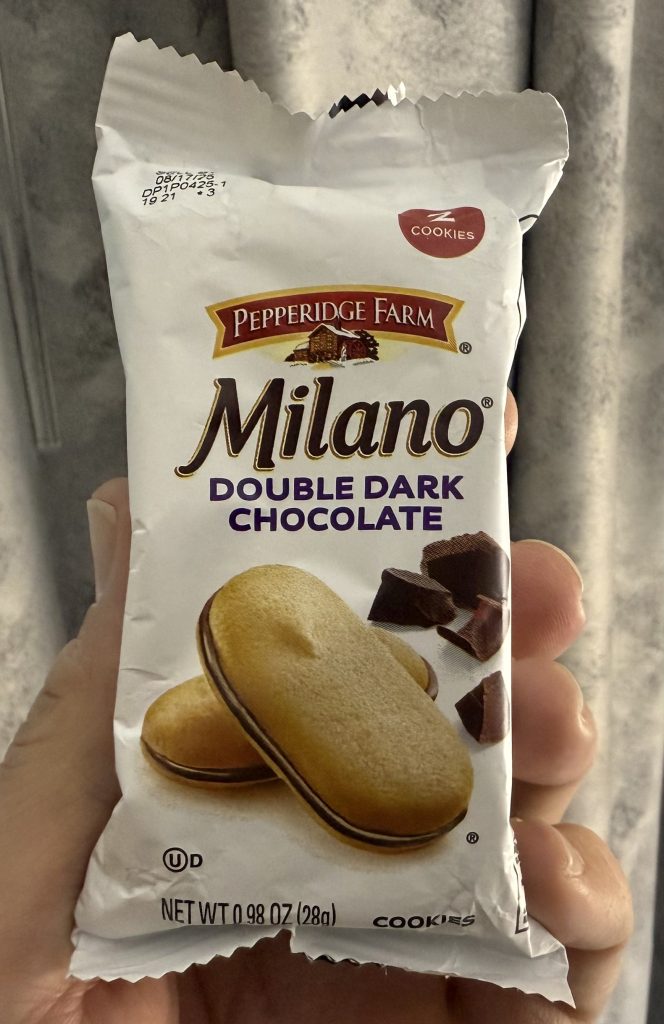
In 2006, the FDA started requiring food manufacturers to list Trans Fat on the label, but a funny thing happened after that. I’ll bet you $50 you can’t find any foods with more than 0 grams of trans fats on the label!
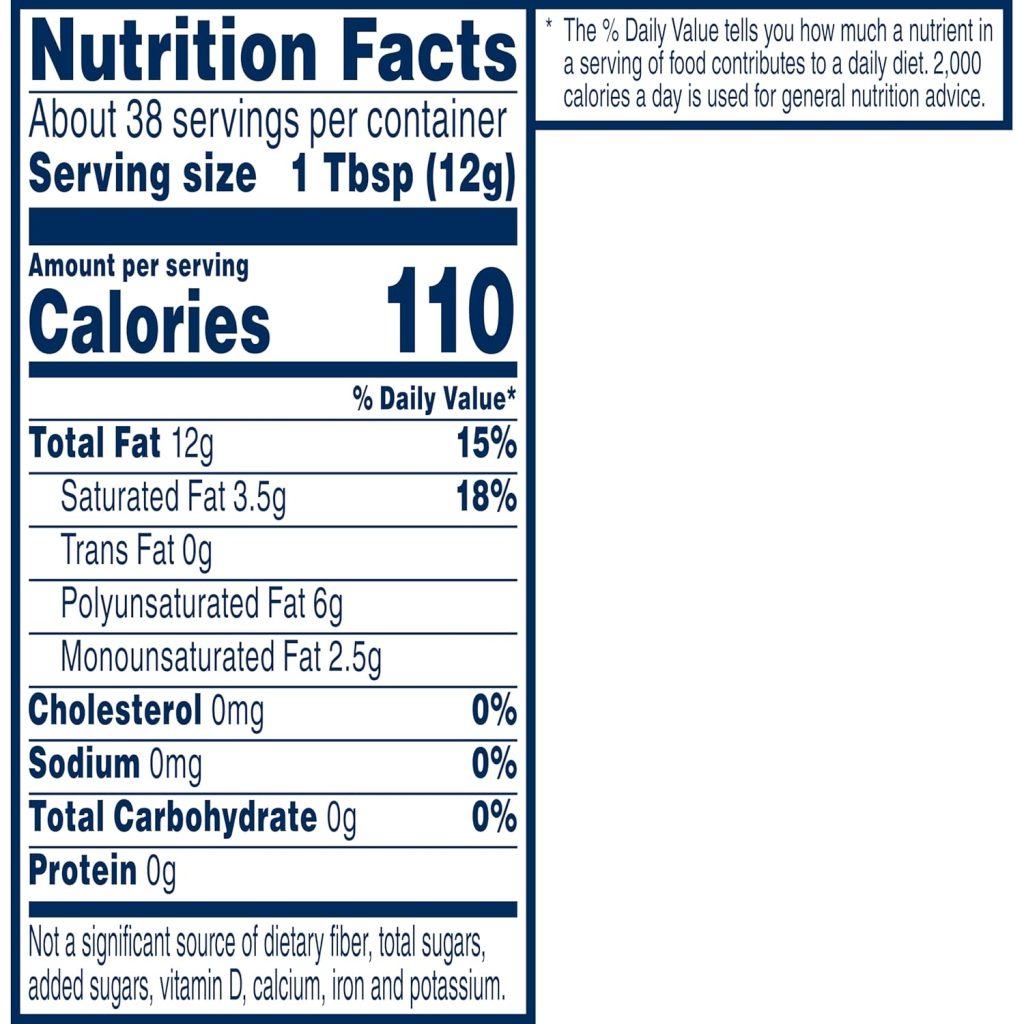
Here’s an example I just found last week:
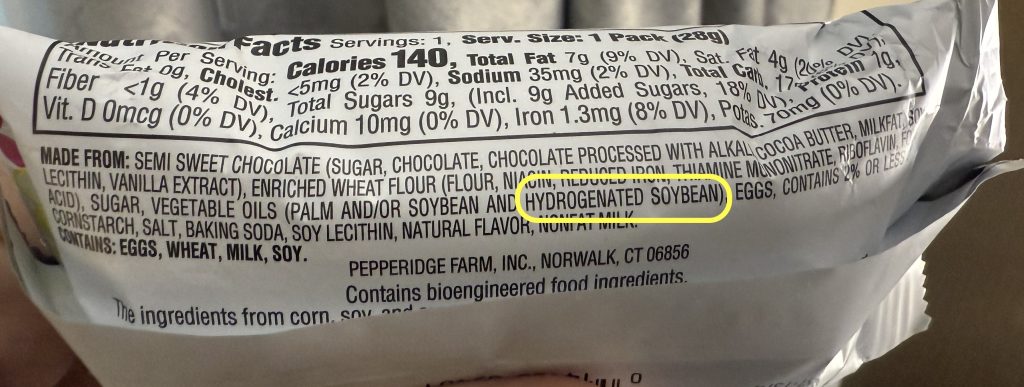
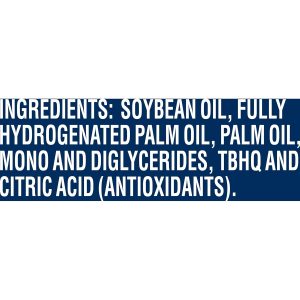
Now for fun, I like to look at the ingredients panel on these kind of things. Here’s what that looks like. Lot’s of ingredients we don’t want, but can you spot the trans-fat?
We can see it’s made with hydrogenated soybean oil (a seed oil), so it most definitelyhas trans fat in it.
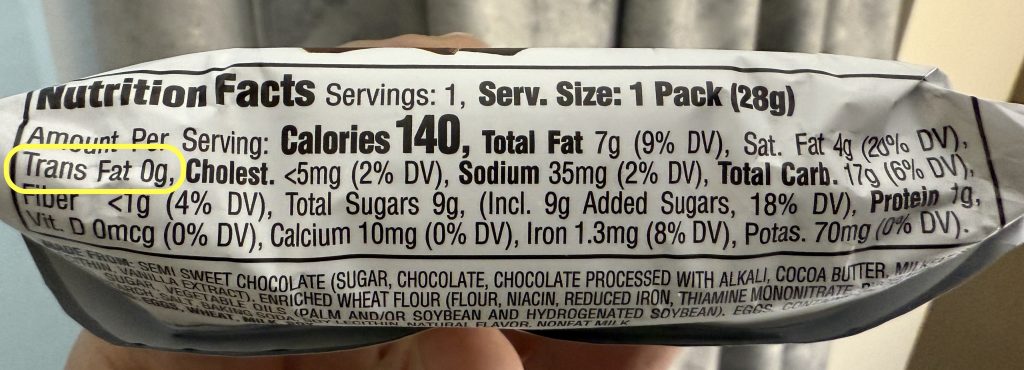
But would you be surprised that the nutrition facts shows 0g of Trans Fat!?
Ok so what’s going on here? Well, if the manufacturer can get the amount of trans fat down to under 500 miligrams (half a gram) per serving, they can legally label it as zero.
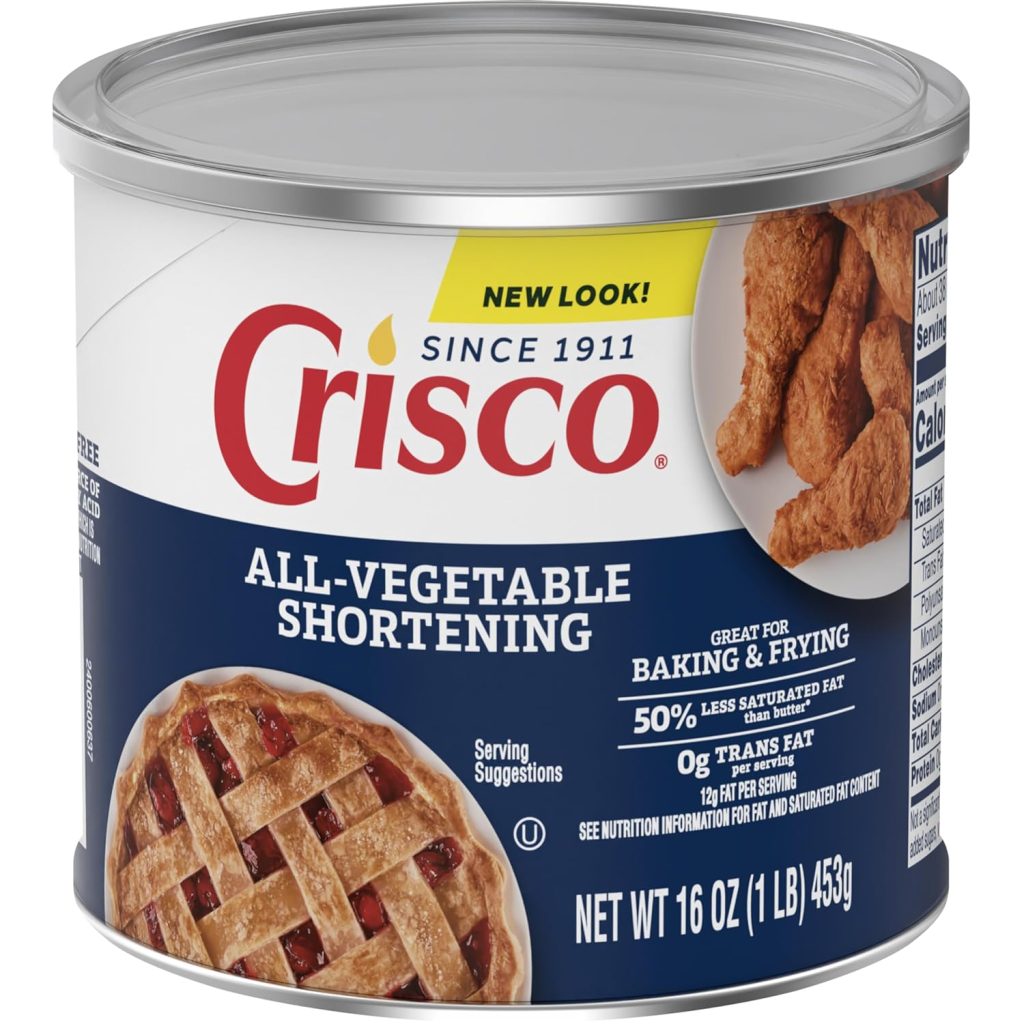
So again we have to be our own advocate. Just because a food claims zero trans fat, doesn’t mean it’s true. And in some cases, they’re really trying to trick you – like this tub of Crisco:
Terrible terrible stuff for you. They promote it as a cheap alternative to butter (pro-tip: butter tastes way better and is much healthier for you), and really try to trick you into thinking it’s a good choice by advertising:
That it’s “ALL-VEGETABLE” – since that sounds healthy
Has 50% LESS SATURATED FAT than butter – since we’ve been told (falsely) that saturated fat is bad and is going to give us a heart attack.
And it’s got 0g TRANS FAT – when it’s actually chock-full of trans fats. Note the “per serving” – pretty tricky.
How big is a serving? 12 grams (1 Tablespoon). Very small.
So first off, here’s a list of the most common seed oils:
Canola (rapeseed) Oil
Soybean Oil
Corn Oil
Sunflower Oil
Safflower Oil
Grapeseed Oil
Cottonseed Oil
Rice Bran Oil
and any oil extracted with chemicalsorheat: This includes any Olive Oil that isn’t Extra Virgin, and fake avocado oils.
NOTE: Margarine is also made from seed oils, and to make it worse, they’re hydrogenated (trans-fat).
Avoid margarine. This includes Earth Balance and anything labeled “Plant Butter.” Plants don’t make butter. They’re trying to trick you into eating margarine by making it sound natural and healthy. Don’t be fooled! It’s bad for your health and your cardiovascular system. Very toxic and inflammatory.
Why are seed oils bad for us?
Several reasons.
For one, they’re usually made from plants we don’t actually eat – OR that we don’t consume in anywhere near the quantities we’re getting in the oil.
Take canola for example. What is a canola? Well, it’s actually a marketing spin to make you think it’s something else. It stands for Canada Oil Low Acid, and there’s actually no such thing as a canola plant. In truth, it’s rape seed oil. We don’t eat rape seeds and just because some marketers convinced the world this cheap oil was “heart healthy” doesn’t mean we should. Marketing claims aren’t fact. Even marketing like the American Heart Association seal should be questioned. It’s on mostly processed and unhealthy products.
Hexane and chemical processing. The more processed, the further away from nature – that typically has a negative impact on our health. Not only are these oils heavily processed, they also use hexane (a toxic solvent) and other chemicals/solvents to make them.
Seed oils are typically rancid. Part of the processing removes the scent so we can’t smell that it’s rancid. Rancid oil is very toxic and should be strictly avoided.
You might notice some of the oils that made the list aren’t made from seeds. They’re still lumped into the “seed oils” group since they’re typically heated and chemically treated, processed with hexane, rancid, de-scented, etc.
Plus, how often do you eat rape seeds, cotton seeds, or a big bucket full of corn or soybeans (what it takes to extract a small amount)? That alone should tell us it’s not something we’re naturally adapted to.
So what oils SHOULD I use?
For high-heat, it’s best to cook with animal fats.
Primary animal fats are:
Butter – Best if cultured, grass fed pastured/pasture-fed, and organic. – Not sure what to get? Kerrygold is a decent choice if you can’t find butter that’s cultured and organic. It’s widely available. Opt for the silver wrapper – it’s unsalted and you can add your own salt to taste.
Grass-fed beef tallow
Ghee (clarified butter)
NOTE: Yes, these are high in saturated fat. We’ve been told saturated fat is bad for us or that it’ll “clog our arteries.” That’s actually not true. Saturated fats are part of a healthy animal-based diet.
For baking, dressings, and everything else use these oils:
Extra Virgin Olive Oil (make sure it’s not fake!)
Unrefined Virgin Coconut Oil
Avocado Oil (make sure it’s not fake! 82% in stores are fake or cut with seed oil!)
How do I avoid FAKE oils?
Believe it or not, most of the “healthy” oils we find in stores are either fake or cut with seed oils. It’s not well regulated and the chain of custody during import makes it difficult to crack down on. But it’s ok, there’s hope! Knowledge is power, and if you know what to look for, you can avoid the fake oils.
Extra Virgin Olive Oil:
I prefer oil from Italy or Greece. I order mine directly from an olive mill in Greece (Isle of Crete) that I personally visited. But if you can’t visit the olive mill and verify for yourself, here are some tips:
Only buy Extra Virgin Olive Oil. Never “Virgin” or just “Olive Oil”, as these are extracted with heat and chemical solvents. Extra Virgin means it’s cold-pressed without any solvents or chemicals. Or at least it’s supposed to be (when it’s from a reputable source). So here’s how to further dig and avoid unhealthy fakes:
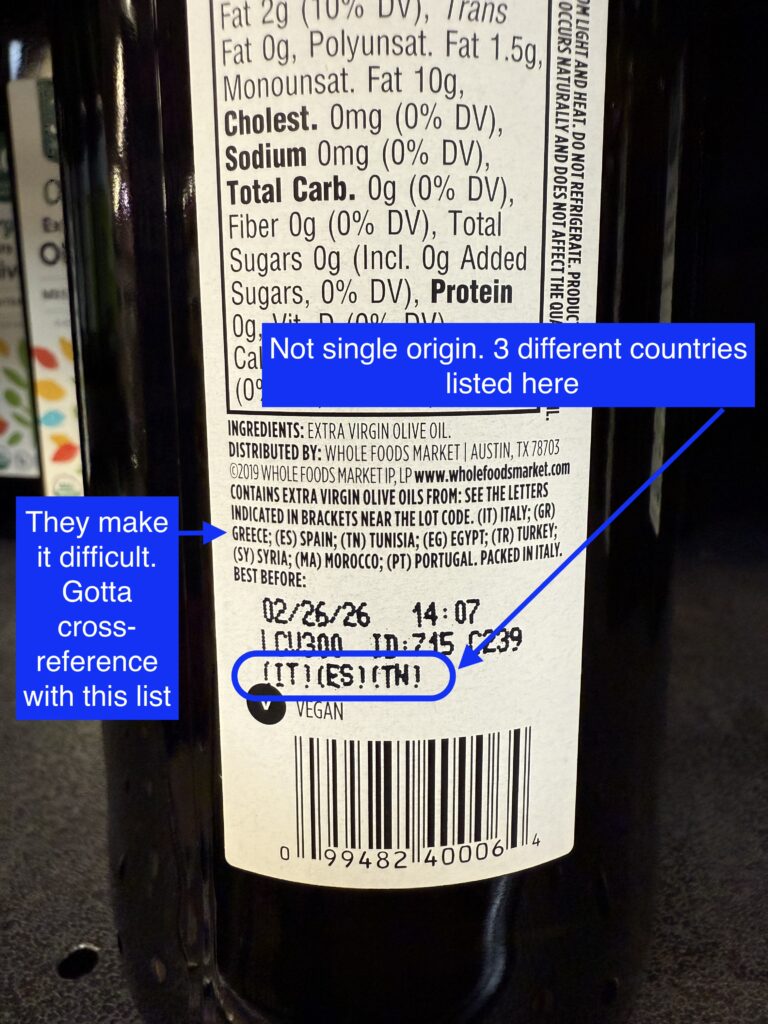
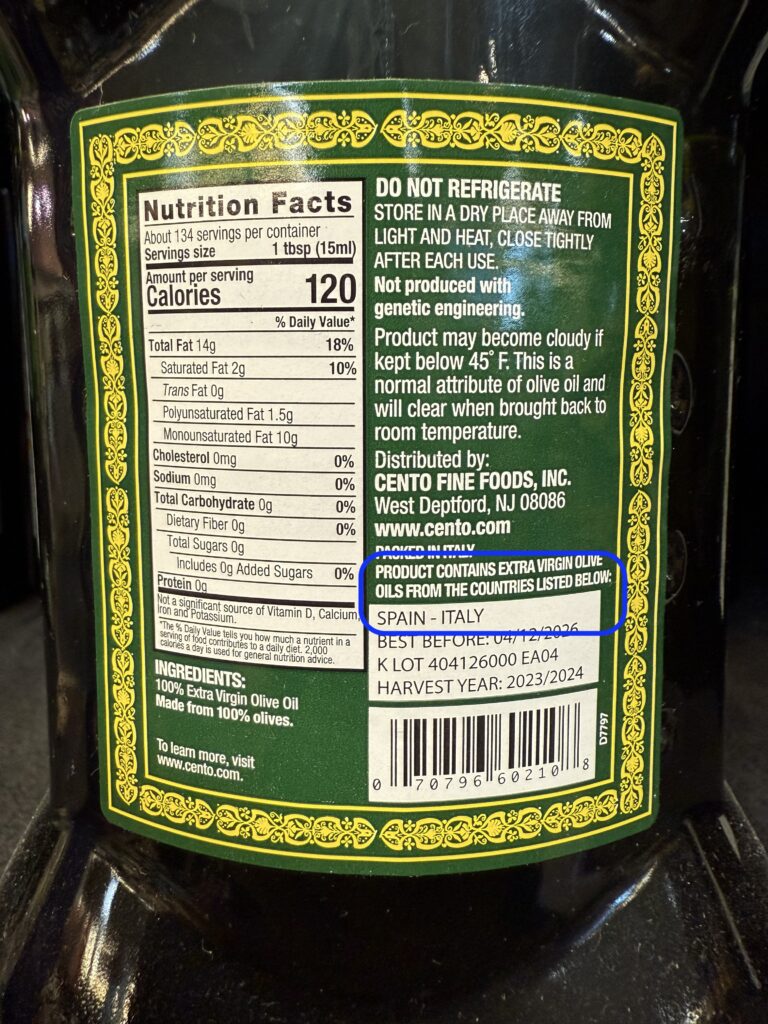
Only buy single origin oil. This means that only one country is listed as the source on the label. If it says “Product of Italy” or Product of Greece” and not 2 or 3 countries, that’s single-origin.
Here are some oils I found at Whole Foods and Traders Joes. Notice how these are not single-origin – so they likely contain seed oils as the chain of custody isn’t tightly controlled:
Another bad Olive Oil:
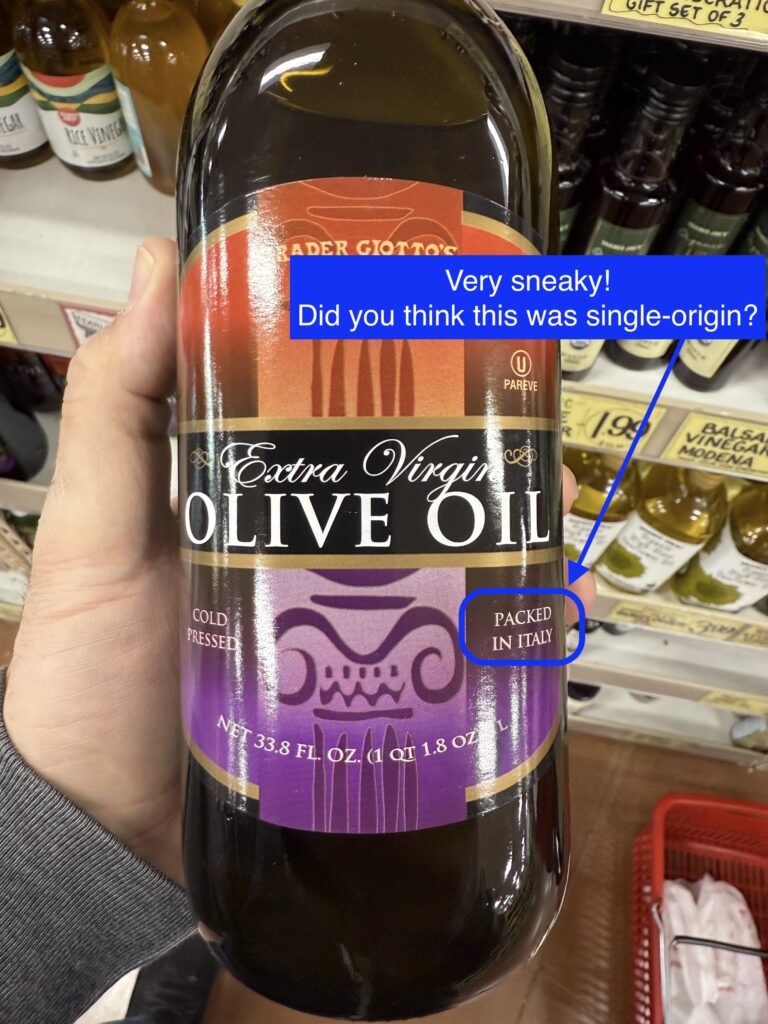
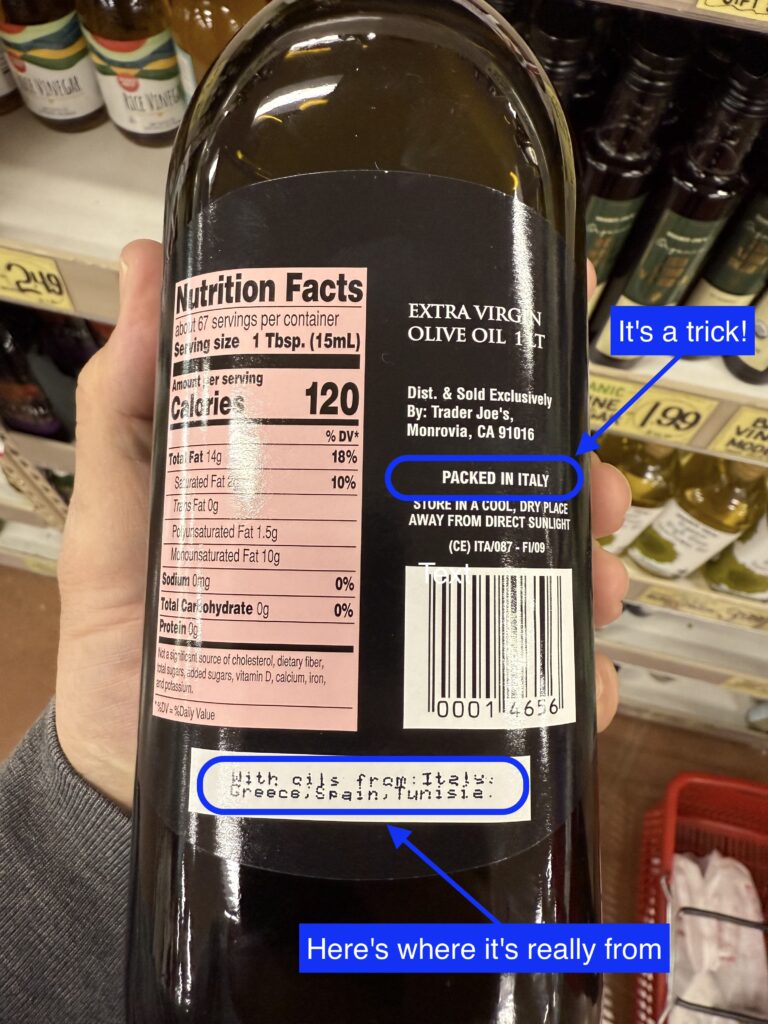
And here’s one from Trader Joe’s where they’re trying to trick you! Notice it says “Packed in Italy” but the sources are from elsewhere. Very sneaky and dishonest!
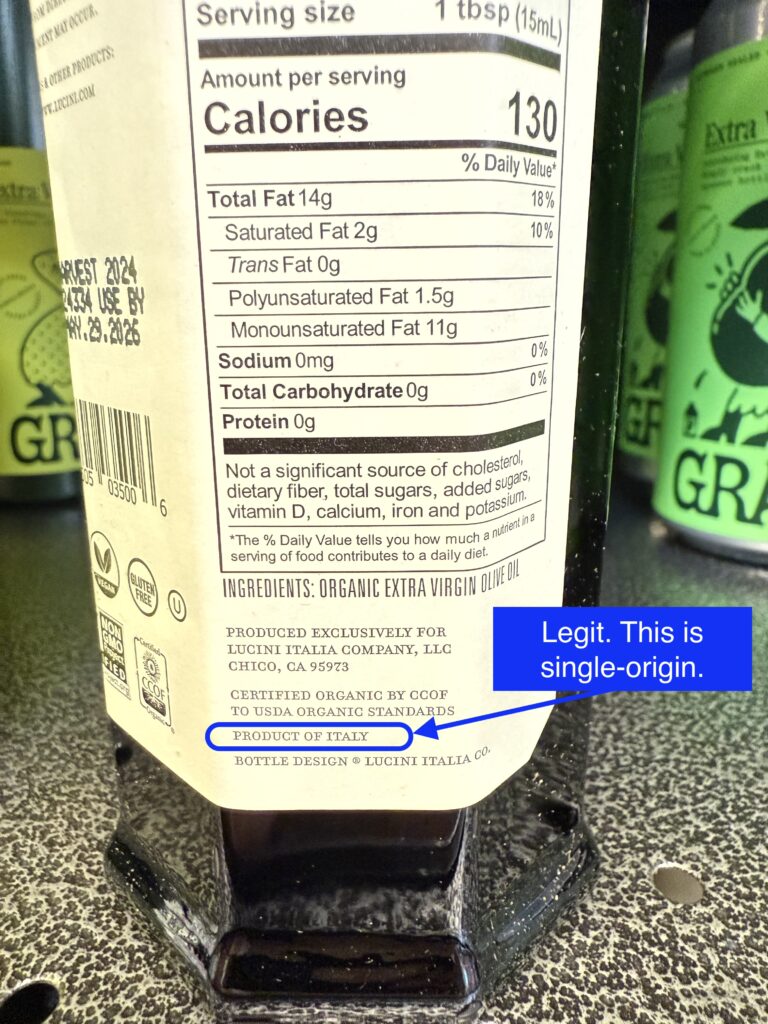
And here’s what a legit single-origin olive oil looks like. This is the back of a Lucini Premium Select Extra Virgin Olive Oil. It’s single-origin (just Italy) and I would use it:
Only buy oil in Glass Bottles! Plastic leaches petrochemicals into the product which are hormone disruptors, they also contain microplastics. Heads up: metal containers are usually lined with plastic – avoid them as well.
Known-good brands:
Lucini – Known-good last I checked and widely available. – Opt for the “Premium Select” version, not the “Everyday.”
Anoskeli – Difficult to get in the US, but great stuff!
Avocado Oil:
Even most Avocado oils are fake. Yes, MOST of them (82% according to this UC Davis study). But you can get real Avocado oil. Here’s how:
Look for a green color (not yellowish). Should smell grassy – like an avocado. Buy only known-good tested oils. These brands are known-good, real avocado oil:
Known-good brands:
Chosen
Primal Kitchen
Consumer Lab is also a great resource for finding tested brands.
Summary
I hope this helped answer the most common questions:
If straining can make your vision worse, you’d think un-straining could make it better… And you’d be right.
Vision is a big topic, but I’ll be posting more in the near future. Dr. William H. Bates, a New York City Ophthalmologist, made incredible breakthroughs in vision issues and successfully reversed nearsightedness, farsightedness, astigmatism, and other refractive issues without glasses or surgery in his patients.
What may surprise you is that this all happened over 100 years ago.
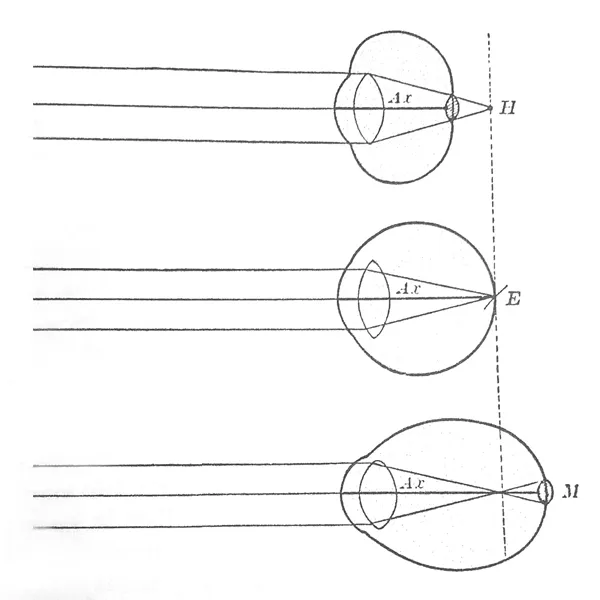
How is this possible? Well you’ve probably seen a diagram like this before. A side view of the eyeball. The middle one has normal vision. The light focuses correctly on the retina.
The top one is a far-sighted eye and the bottom is near-sighted. Although these are quite exaggerated.
Here’s another exaggerated illustration for reference:
So you might think, why not change the shape of the eye so light focuses correctly? Is the eyeball shape fixed and unchangeable?
And it turns out it’s not. Did you know we have all these muscles around our eyes?
And these muscles can pull our eyeballs into different shapes. Especially if we are straining.
So before you start trying to do eye muscle exercises or “strengthen” the muscles, don’t. These all work properly and automatically when we get them to relax. So we don’t need to work out the eye muscles, we need to do the opposite and get them to relax. The starting point is realizing that if our eyes aren’t seeing clearly, we have locked in the strain and don’t even realize it. When you learn to let go of the strain mentally, you’ll see clearly and you can see it for yourself.
More to come soon. But if you can’t wait, look for a natural vision improvement coach like Gloria Ginn or Nathan Oxenfeld. You can read about the techniques, but it’s well worth having an expert watching how you’re doing them and giving you tweaks proactively in real-time so you don’t lock in bad habits.
It’s a simple, yet significant discipline to start improving yourself, create order, and build the future. Taking vitamins daily is the “keystone habit” upon which all other health practices are built.
Daily Supplements:
Adults: take daily with food. For optimal effectiveness, separate into 2 batches taken with 2 different meals (breakfast and lunch, for example).
2 Nordic naturalsultimate omega soft gels
Fish oil. The Nordic Naturals are purified so we don’t have to worry about mercury. I also don’t get “fish burps” or upset stomach with these like I have with other fish oil brands.
4 Garden of Life Vitamin Code Whole Food Multivitamin Capsules
Look for whole food supplements instead of synthetic vitamins. Not only will you get better absorption, you’ll also avoid known carcinogens like DL-Alpha-Tocopherol (used as synthetic Vitamin E). You also want to avoid taking Folic Acid – and take Folate instead.
More info and alternatives: If you prefer to take only 2 tablets per day, these are a viable alternative and provide similar nutrient levels:
Garden of Life Organics Whole Food Multivitamin for Men 40+ Note: The “40+” part is mostly marketing, you can take it if you’re under 40. It has the same base but adds Pumpkin, Turmeric, Lycopene, and Pomegranate (good for prostate and heart – Men of all ages). It also bumps down the B12 (500% RDA instead of 1000%).
If you don’t want the prostate and heart support, here’s the Non-40+ version.
2 Juvenon tablets
Dr. Andrew Weil (and co) found that if you combine Biotin (300mcg) , Alpha Lipoic Acid (400mg), and Acetyl L-Carnitine HCL (1,000mg) – it has incredibly powerful anti-aging effects. Supports mitochondrial health for optimal brain, heart, and vascular health.
I’ve wanted to improve on this by using R-Alpha Lipoic Acid instead, but haven’t found the right components and dosage off the shelf, so I take Juvenon daily, since I know it works.
Pycnogenol (French maritime pine bark extract) is a powerful antioxidant that’s been shown to drastically improve nerve and blood vessel elasticity. I’ve personally seen it stop diabetic retinopathy in my father and prevented him from losing his eyesight. It’s also used to heal nerves and improve blood pressure.
I take it as a preventative to support a healthy brain, nervous system, and circulatory system. So I take 50-100mg/day. If you have diabetic retinopathy or neuropathy, dosage is 150mg/day (as tested in the studies and that’s what worked for my father).
Garlic has incredible natural medicinal properties including cardiovascular health, immune function, digestion, inflammation relief, and detoxification.
I take 2-4 capsules a day (I also eat fresh garlic as often as I can 😊). Years ago I had a chronic cough. I started taking 4 of these a day and the cough went away – so I’d also recommend it for respiratory health.
Magnesium deficiency can cause anxiety/stress, sore muscles, high blood pressure, restless leg syndrome, poor quality sleep and more. Taking it can help with these and also give you a sense of calm.
Magnesium Glycinate is one of the best forms to take. Some other forms of magnesium don’t absorb well, and some even cause a laxative effect! You don’t have to worry about that with Magnesium Glycinate.
I also spray magnesium oil (separate article coming soon) underarm which works as a natural deodorant and helps supplement magnesium as it absorbs through the skin. The spray also works well directly on sore muscles.
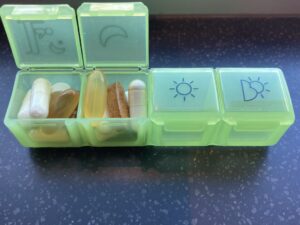
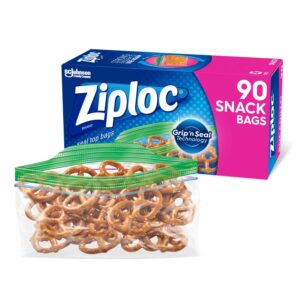
“If you fail to plan you can plan to fail.” So set yourself up for success by preparing your vitamins a week or two in advance. Package your batches into snack bags or pill organizers so you can bring them with you. That way you always have them available with you during a meal or snack.
I’m currently using these so I can take one compartment with each meal, two times a day. This 4-block lasts me 2 days (4 batches).
Stress is a fight or flight response. Our body gets ready to either fight or run away. In modern society this mis-fires and we don’t do either.
Our body responds to stress by releasing adrenaline and cortisol. The fastest way to dissolve these is to exercise! So rather then stewing in these fight or flight chemicals, a 2-5 minute run, jumping jacks, push-ups, or burpees are a great way to burn up these chemicals in our body and literally dissolve our stress.
For longer term practice, create a habit of slowing down and breathing deeply whenever finding yourself starting to get in a stressful situation. We tend to take shallow breaths. Practice taking deep “belly breaths”. You can use stress as a reminder to breathe deeply.
Most of what we’ve been told is wrong. Here’s what to eat and what to avoid for optimal health:
Eat
Grass fed Beef, Wild Fish (Salmon, Black Cod, Tuna), Eggs (with yolks!)
Full-fat dairy – butter, raw cheese, raw milk, raw kefir
Beef Tallow, Bone broth
Fruits
Healthy oils – Single-origin Extra Virgin Olive Oil (EVOO), Coconut Oil, Avocado oil (known good brand: Chosen)
Honey, Maple Syrup
Some vegetables – don’t overdo it, they have natural defense chemicals in them
Don’t worry about fat. It’s an important and healthy macronutrient. Yes that includes Saturated fat – it’s good for you. What you’ve been told is wrong 😊.
You don’t need grains, but if you enjoy them lean towards glyphosate-free sprouted grain bread (silver hills or ezekiel) or pasta/bread/pizza made from imported Italian or French flour – in moderation. The wheat plant in Europe is different from what we have in the US. It’s much healthier for us. The wheat plant we have in the US has been selected/modified for high-yield. Fun fact: People who have gluten intolerance can usually eat european flour without issue. That’s why. It’s a different plant.
Another fun fact: People who have lactose intolerance can usually consume raw milk without issue. That’s because it’s not cooked (aka “pasteurized”), so it includes the living enzymes that help you digest lactose. Best to avoid Homogenization as well – as it changes the molecular structure of milk so the cream doesn’t separate out. It’s a high impact on health for the silly convenience of not having to shake it.
Avoid
Avoid seed oils! They’re very unhealthy. These include:
Canola (rapeseed) Oil
Soybean Oil
Corn Oil
Sunflower Oil
Safflower Oil
Grapeseed Oil
Cottonseed Oil
Ricebran Oil
… and any oil extracted with chemicalsorheat: including Olive Oil that isn’t Extra Virgin, and fake avocado oils.
You might notice some of these are not made from seeds. They’re still lumped into the group since they’re heat and chemical treated, typically processed with hexane (a toxic solvent not safe for human consumption), the oil is often rancid (oxidized), and the scent is removed so you can’t tell. Plus, how often do you eat rape seeds, cotton seeds, or a big bucket full of corn or soybeans (what it takes to extract a small amount)? That alone should tell us it’s not something we’re naturally adapted to.
Avoid margarine – this includes earth balance and anything labeled “plant butter”. Plants don’t make butter. They’re trying to trick you into eating margarine by making it sound natural and healthy. Margarine is primarily seed oils, and hydrogenated oil (trans fat). Very toxic and inflammatory.
Moderation and Sustainability
Aim for 80% healthy and 20% or less everything else. This gives you some flexibility to eat what you like without stressing.
Daily routine – example diet and meal ideas to maintain health:
Fermented foods every day. ACV (Raw Unfiltered Apple Cider Vinegar), kimchi, Sauer kraut – real fermented
Vitamin regimen
Green tea or matcha
Evoo
Grass fed Beef and wild fish
Full fat dairy – grass fed butter – Pasteured cultured organic is best if you can find it. Otherwise kerrygold, cheese
Raw milk – matcha latte
Fruits and vegetables
Ease into the day. Low stress.
Swish with coconut oil (aka oil pulling). Brush with nano Hydroxyapatite toothpaste
Organic Sprouted bread – Silver Hills or Ezekiel. Or bread made from European wheat.
Egg and raw cheddar sandwich on sprouted grain bread is a good choice.
Organic Heirloom popcorn – popped stovetop in coconut oil, finish with garlic powder and sea salt.
French toast: Use silver hills organic sprouted bread, eggs, vanilla extract, cinnamon. Cook in stainless steel pan with pastured butter, top with butter and maple syrup. Dust with Simply Organic Pumpkin Spice.
Chomps or Country Archer Grass-Fed Beef Jerky makes a great snack
L. Reuteri Yogurt (half a cup) with a splash of maple syrup
Chosen or Primal Kitchen Avocado Oil Mayo – great for making egg salad, deviled eggs, and steak sandwiches.
Safe Catch or Wild Planet Tuna – mix with Fairchild’s Apple Cider Vinegar and high quality Extra Virgin Olive oil. Sprinkle some “everything but the bagel” seasoning on it.
Salad – tossed with some high quality (single origin) Extra Virgin Olive Oil and Fairchild’s Apple Cider Vinegar.
Being stuck in “fight or flight” response. Body/mind builds a reflex habit to react from a place of fear/worry/stress instead of calm
Approach
We can retrain/replace our habit of dealing with stress/anxiety with relaxed vigilance – nervous system self regulation.
We accidentally train ourselves to hold stress in difficult situations. Instead, we just need to train ourselves to maintain a calm nervous system in difficult situations. It’s what medical professionals and emergency responders train to do.
When you calm your body, you send a message through your vegus nerve to the brain to calm your mind as well.
Another pro-tip: Retrain to recognize being “nervous” to being “excited” instead. It’s easier to recognize and have the positive frame of excited, and drop it quickly too.
What we want:Parasympathetic response as our primary response. Our parasympathetic response slows things down and calms the mind and body, otherwise we get stuck in fight or flight. When stuck in fight or flight relaxation doesn’t resolve the underlying issue, it just distracts us but issue stays there and causes us anxiety.
Tips to default to parasympathetic response
A paramedic commented that the best advice he received in paramedic training was: “Your patient’s emergency is not your emergency. Skill saves, not emotions.”
Keep that in mind, avoid getting wrapped up in other people’s stressful situations and avoid taking the emotions on personally. You’ll be far more able to help from a place of calm and steadiness.
Watch the video below from Emma McAdam, LMFT. There’s a great practice at the end as well. Then come back and read the rest of this article.
Practice:
Soothing body throughout the day so your body isn’t stuck in fight or flight. (Also known as “being present” or “presencing yourself”)
Ask yourself: “Is this really a threat? Am I safe enough right now?”
Recognizing that in this moment you’re actually safe enough turns on parasympathetic response as your primary response
Use a grounding skill. Willingness. Be present. Be open. Ground yourself on acceptance first – not force.
Practice/check-in every 15 minutes for first week until it becomes habit:
Breathe, check in. Take slow breath.
Or yawn
Or tense up, then relax
Or tell yourself “I am safe enough right now”
Reflection
As my close friend John reminds me: “Stress is a choice.” We have a false view that if the outside situation is stressful, then we must be stressed internally. But is that actually true? It’s not. We generate a stress response inside our own bodies. And that’s where we have power and control. And if it feels like we NEED to be stressed, or it’s dangerous not to be. Know this:
It turns out we generally perform better if we’re relaxed. We make better decisions, and can even respond faster.
World-class athletes perform best by being as calm as possible. I heard about an interview with olympic gold-medalist and champion runner Florence Joyner (AKA “Flo-Jo”). Flo-Jo was asked what she’s thinking when she’s in the lead and needs to keep out front of the runners right behind, breathing down her neck. Turns out, it wasn’t stress keeping her in the lead. She was thinking: “Lord help me stay relaxed!”
Stressing would have caused Flo-Jo to lose her lead. Relaxation helps us perform at our peak.
We don’t need to take stress inside of us. Be busy and vigilant while maintaining a calm nervous system. Practice relaxed vigilance.
Inflammatory response due to diet or skin contact with soaps or chemicals
Approach
Look at diet first. Dairy (most common from what I’ve seen). Tomatoes-nightshades. Plants in general contain defense chemicals and can cause reactions.
Note on dairy – pasteurized dairy (cooked) causes many reactions. The cooking kills the enzymes that help you digest it. It also kills the healthy bacteria and they break down into histamines. Histamines can trigger “allergic” reactions.
Also want to avoid homogenized milk. It changes the molecular structure to suspend the cream in the milk so you don’t have to shake it. It’s very unnatural and unhealthy.
Find raw dairy. If you can’t find it, opt for low temp pasteurized. Avoid ultra pasteurized.
Soap – with fragrances, preservatives, harsh detergents.
Laundary detergent. Don’t use Tide or mainstream. Has forever chemicals in it. Has fragrances dyes etc that can cause skin irritation
Use jojoba oil or beef tallow on the skin as a natural moisturizer
In the past I’ve taken Claritin. And it works, but I feel weird (almost hyper/tweaky) and too dried out from it. So for many years I took a spoonful of raw local honey daily. It works surprisingly well, but takes at least a week or two to really start to kick in.
While I’d still recommend raw local honey (in your daily Matcha Latte), years ago I stumbled on Quercetin during the pandemic as an alternative to Ivermectin. I had omicron. It was pretty mild, but when I lost my sense of smell it worried me. So I figured I’d try a combination of Quercetin, Bromelain, and Zinc – and in less than 24 hours, my sense of smell was coming back! Pretty amazing result, so I started researching Quercetin. What else can it do? And I found out for most people it helps with seasonal allergies when taken daily.
Building on that, coupling Quercetin with Zinc can be a powerful antiviral. And Bromelain helps with spike protein. In this age of potential spike protein viral shedding exposure – I take a combo of Quercetin, Bromelain, and Zinc – and I swear by it.
Not only are my allergies minimal (works way better than honey), but I avoid getting sick even with significant exposure to people with cold, flu, and the ‘vid ;).
Key benefits:
Prevents/minimizes seasonal allergies.
Works like a shield against the winter-season viruses.
What to take:
Quercetin 500-1000mg
Bromelain 2400GDU
Zinc 50mg
Take daily. Can take several weeks to kick in, so it’s best to take preventatively on a daily basis.